

Today we're launching the TubePull Developer API — a REST API that downloads YouTube and social-video files programmatically, fetches metadata, and returns the finished file on a secure, signed link.
Most "YouTube APIs" don't actually download anything. They hand you metadata, a transcript, or a raw stream URL that expires in minutes and that you still have to fetch and host yourself. The TubePull API does the whole job and hands your code a single, ready download URL when it's done.
Full details are on the Developer portal and the API docs. Here's the short version.
What does the API actually do?
The API covers the download lifecycle with five endpoints:
| Method | Endpoint | What it does |
|---|---|---|
GET | /api/v1/video/metadata | Fetch title, duration, available formats, thumbnail |
POST | /api/v1/video/download | Queue a download, returns a request token |
GET | /api/v1/video/status | Poll the job, get the finished download link |
GET | /api/v1/credits | Check remaining credits and billing period |
POST | /api/v1/auth/key | Issue a new API key programmatically |
The flow is simple and asynchronous: POST a URL to /video/download, get back a request_token, then poll /video/status until the job is done. You get a signed download link valid for one hour. Authentication is a Bearer token:
curl -X GET "https://tubepull.com/api/v1/video/metadata?url=https://www.youtube.com/watch?v=dQw4w9WgXcQ" \
  -H "Authorization: Bearer tp_live_your_api_key_here"
What you don't have to build
Reliable video downloading is a moving target — platforms change constantly, and naïve downloaders break. The TubePull API handles all of that behind one endpoint, so you don't have to build or maintain it.
A raw stream URL from a marketplace wrapper leaves you owning the retries, the reliability, and the storage and hosting. The TubePull API absorbs all of it and just hands you a finished, hosted file.
Built-in cost control
Every paid tier includes a monthly allowance of download credits plus a separate pool of metadata credits. Go past your downloads and you're billed simple per-download overage — no credit-multiplier math, no surprise tiers.
If predictable spend matters more than never stopping, you can set a monthly overage hard cap from your dashboard. Once your overage charges reach the cap, further downloads return an HTTP 402 instead of billing further — so a runaway loop or a viral spike can't run up an unbounded bill. Metadata calls draw from their own pool and never touch your download credits.
How the pricing compares
We checked every commercial YouTube/video API with public pricing — RapidAPI wrappers, scraping platforms, transcript APIs, and the few that actually deliver files. The pattern is stark.
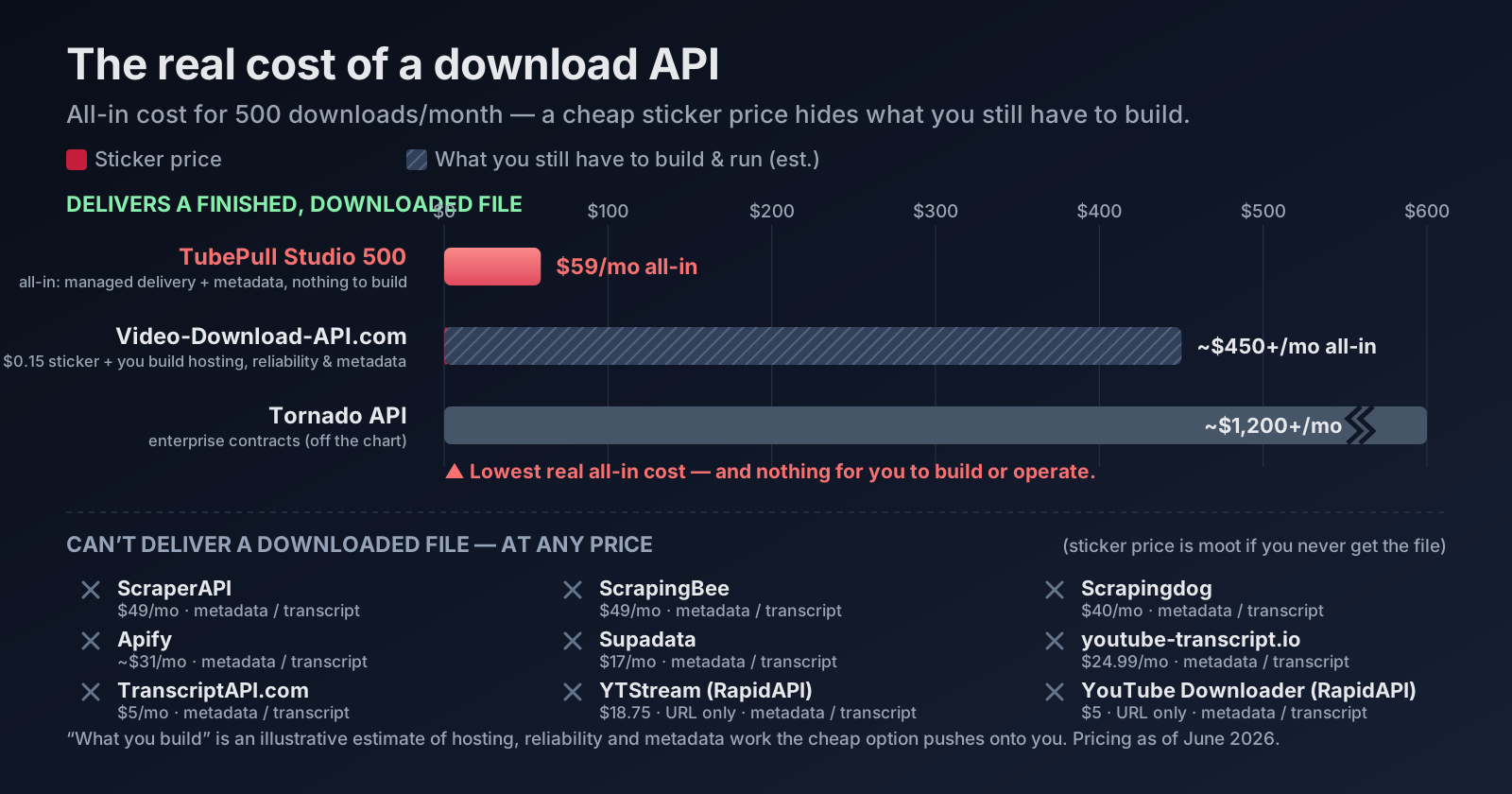
At first glance, plenty of services look cheaper than TubePull. But almost none of them download the file:
- Scraping APIs — ScraperAPI ($49/mo), ScrapingBee ($49/mo), and Scrapingdog ($40/mo) return YouTube metadata and HTML. Their "YouTube API" endpoints cost ~5 credits per call and never produce a video file.
- Transcript APIs — Supadata ($17/mo), youtube-transcript.io ($9.99–$79.99/mo), and TranscriptAPI.com ($5/mo) are excellent at transcripts, but transcripts are all they do.
- Apify — YouTube actors (~$29–$39/mo all-in at these volumes) return metadata and download links, not hosted files, and require a platform subscription on top.
- RapidAPI download wrappers — YTStream ($18.75/mo) and similar listings ($5/mo) return a stream/download URL with no managed hosting and variable reliability — you still fetch and store the bytes yourself.
Filter for who actually hands you a finished, hosted file and the field collapses to three: Video-Download-API.com (cheap per download, but pure pay-as-you-go with no managed hosting or bundled metadata), Tornado API (real managed delivery, but enterprise-priced from ~$1,200+/mo), and TubePull.
That leaves a clear gap in the middle: managed downloads plus a metadata API on predictable monthly pricing, for developers and small teams rather than enterprises. That's exactly where the TubePull API sits — not the cheapest line item, but the most affordable way to get the whole job done without running the infrastructure yourself.
Pricing tiers
| Plan | Price | Downloads / mo | Metadata calls / mo | Overage |
|---|---|---|---|---|
| Sandbox | Free | 0 | 50 | — |
| Dev 100 | $19/mo | 100 | 500 | $0.25 / download |
| Studio 500 | $59/mo | 500 | 2,500 | $0.18 / download |
| Scale 2000 | $149/mo | 2,000 | 10,000 | $0.12 / download |
Start free in the Sandbox tier — metadata calls, no card required — and move up when you need real downloads. The overage rate drops as you scale, so the more you run, the cheaper each marginal download gets. Full details are on the Developer API page.
Who it's for
- Content tools and dashboards that need to pull a creator's own uploads on demand.
- Archival and backup products that preserve public-domain or licensed material.
- AI and research pipelines that need the actual media file (not just a transcript) for processing.
- Internal automations where you'd rather call one endpoint than maintain your own downloading stack.
The same usage rules that govern responsible use of TubePull apply to the API: download only content you own, that's licensed to you, that's public domain, or that you otherwise have a clear legal right to download. The API is governed by Section 8 of our Terms.
Get started
- Create a free account (or sign in).
- Grab an API key from your dashboard under Settings → Developer API.
- Make your first call against the Sandbox tier — metadata is free.
- Upgrade to a paid tier when you're ready to download files.
The Developer portal has the full pricing breakdown, and the API reference has every endpoint, parameter, and response shape. If you build something with it, we'd love to hear about it — get in touch.